

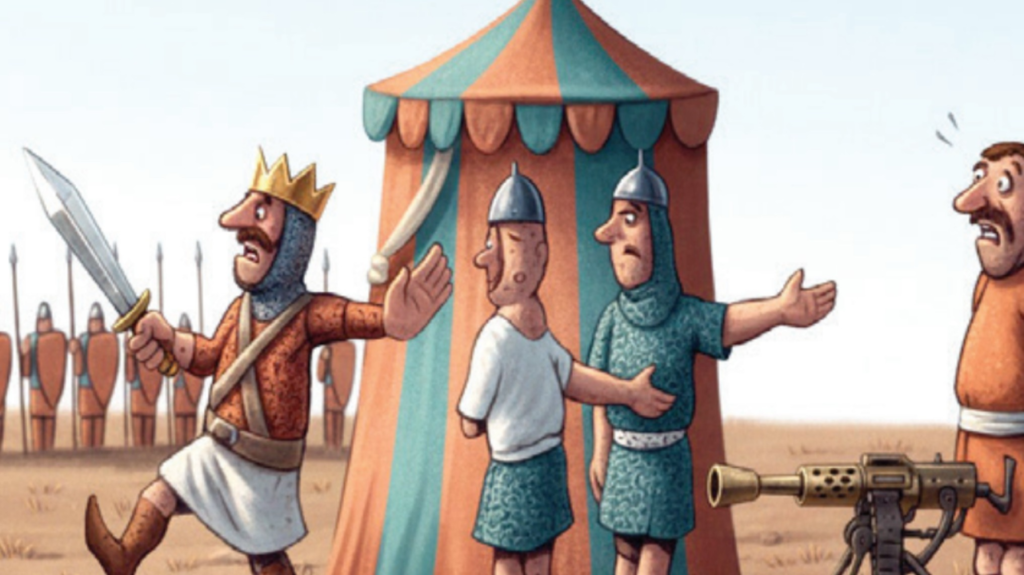
Look closely at the image.
On one side, a king confidently strides forward with a sword—symbol of authority, tradition, and past victories. On the other, a modern machine gun is being calmly positioned—systematic, scalable, and brutally efficient.
This image perfectly captures what’s happening in channel sales today.
The Sword: Traditional Channel Thinking
For decades, channel sales was built on:
- Relationship-first partner recruitment
- Loyalty-based alliances
- Annual partner kickoffs and logo-heavy slide decks
- “Trust us, deals will come” optimism
These approaches worked when markets moved slowly, buyers relied on intermediaries, and competition was limited.
But today, swinging harder with the same sword doesn’t win battles.
The Machine Gun: Modern Channel Execution
The partners winning now are operating with:
- Precision GTM motions
- Repeatable plays
- Data-driven partner selection
- Clear monetization paths
- Outcome-based accountability
This isn’t about being ruthless. It’s about being intentional.
Modern channel success is less about who you know—and more about:
- Who can generate pipeline
- Who can close
- Who can scale
- Who aligns to your ICP, use cases, and buyers
Channel Sales Is No Longer About Ecosystem Size
Big ecosystems look impressive on slides. But large partner lists without activation are just… tents in the desert.
The future belongs to companies that:
- Treat channel as a revenue engine, not a branding exercise
- Design partner motions by deal type, buyer, and market
- Invest in enablement tied to monetization, not certifications
- Measure partners on pipeline velocity and win rates, not attendance
Alliance Management ≠ Relationship Management
This is the uncomfortable truth many organizations avoid.
Alliance management today is:
- Commercial design
- GTM orchestration
- Field alignment
- Incentive engineering
- Pipeline governance
Relationships matter – but only when paired with execution discipline.
From Medieval Warfare to Modern Strategy
The companies still fighting with swords will be outpaced – not because they lack partners, but because they lack operational clarity.
The winners:
- Architect their partner ecosystem like a product
- Treat GTM plays as code – tested, refined, and scaled
- Focus relentlessly on monetization, not motion
Final Thought
The question every CRO, Head of Alliances, and Channel Leader should ask:
Are we building a beautiful ecosystem… or a revenue-generating one?
Because in today’s market, good intentions don’t win deals – execution does.
